
67 - The Soundboard, the Sphere, and the Key
Last Summer, I audited a graduate-level counseling course at a Christian University. The following includes an excerpt from a paper submitted for that course entitled “Open Future / Exploratory Therapy” on July 30, 2025.
For decades, the question has been asked, “What causes someone to be attracted to the same sex?” Genes were a popular focus of scientific research for some time, yet research has shown that no gene or group of genes has more than a small influence on same sex behavior.[1] In answer to the oversimplification of searching for a singular cause of same sex attractions, let us consider the following illustration of its complexity.
The Soundboard

Many factors are involved in the formation of sexuality. These vary for different individuals, and may include the following[2]:
1. Gender nonconformity
2. Relationship with mother
3. Relationship with father
4. Relationships with siblings
5. Relationships with peers
6. Personality type
7. Birth order
8. Genes[3]
9. Prenatal hormone exposure
10. Postnatal hormone levels
11. Self-identity
12. Incidents of sexual abuse
13. Other Adverse Childhood Events (ACE’s. I.e. – divorce, trauma, domestic abuse, etc.)
If we were to visualize these factors as though they were plugged into the channels on a soundboard or an audio console, we could equate the intensity of the impact each of these factors has on a person’s sexual temptations to the volume level. For some individuals, a particular factor or factors could have a high impact on their sexual temptations (and thus would be considered “loud”), and for others, that same factor could be rather negligible (or “quiet.”)
For example, someone who experienced traumatic sexual abuse, or repeated incidents of sexual abuse, would result in a loud or high impact on their sexuality. Where someone like myself, who has not experienced sexual abuse, would have a quiet or low impact on their sexuality. Someone who has had a good relationship with either of their parents would find that to have a low impact on their sexual temptations. In contrast, someone who had a bad, or even absent, relationship with either parent would find that to have a higher impact on what tempts them sexually.
When we step back to view the soundboard as a whole, it’s easy to see how there are any number of combinations of factors creating a great variety of sexual temptations. The wrong mix, as it were, may lead to temptations for the same sex, where these factors in another arrangement may lead to temptations for the complimentary sex.
Yet this illustration is not a static one. A soundboard is seldom used to create a single sound. It’s most often used to combine several sounds to produce a melody. And so it is with human sexuality – it’s not something that one experiences in a static form, like a photo or a painting. It’s something that is more dynamic, like an ever-changing song. The impact of the factors that combine to form our sexual temptations can change over time as we live, grow, learn, and relate to other people.
In a 2021 interview, Dr. Lisa Diamond described the heritability of personality type to be higher than temptations for the same sex. She noted that societal pressure can negate the “opportunity to express” these feelings, giving favor to an external locus of control. She also ignores the reality of how the human reproductive system is designed to work. The right circumstances in her mind are, from a Christian perspective, the wrong circumstances, leading one towards sin.[4]
This leads us on to the next level of why the nature of sexual temptation is so complex…not only do these individual factors change over time, but they also impact one another.
The Sphere
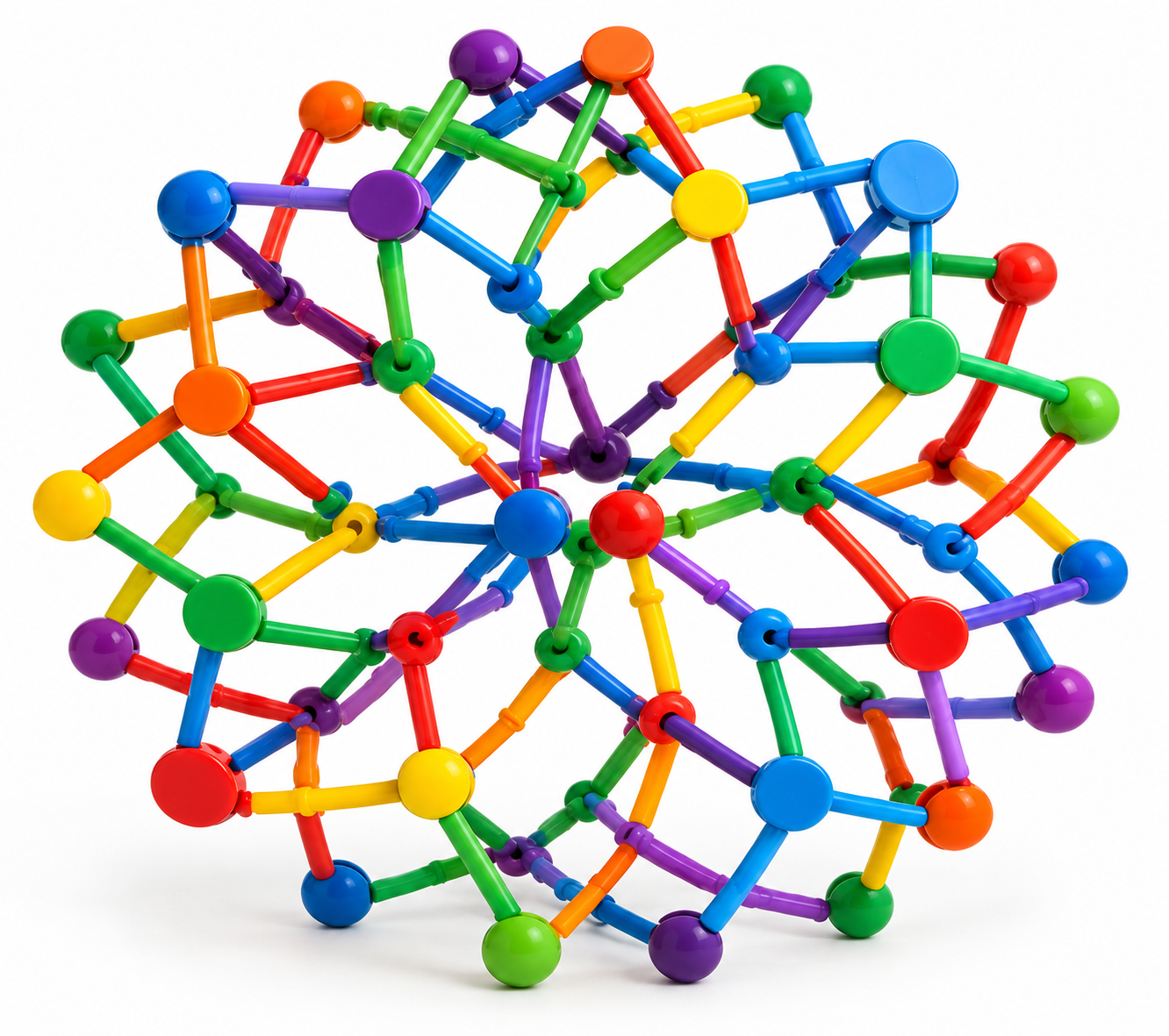
To further illustrate the variations of sexual temptations, I’ve found it helpful to picture a Hoberman sphere. Imagine that each of the connections corresponds to the different factors influencing sexual temptations, as noted above in the soundboard illustration. (Recalling each was represented as a distinct channel on the board.) Within our sphere, we see that these different balls are all connected to one another, and their size corresponds to the intensity of the impact one has upon the other. (A large ball has a greater influence on the other balls, a smaller one has lesser influence.) The balls, along with their degree of influence, change in size over time.
This dynamic interaction helps to form a more realistic understanding of sexual temptations, because in reality, each of the factors mentioned in the previous example using a soundboard are not isolated into separate compartments of our lives. Our sexuality does not exist as a series of instrumental solos, but rather all of the channels combine and affect one another to varying degrees that change as we live and grow. The combination of these impacts may serve to intensify and reinforce the direction of one’s sexual temptations.
It is not difficult to imagine how sexual abuse will have an impact on one’s relationships with their peers, for example, serving as a filter through which any potential sexual partner will have to pass. What that filter may look like may be determined by any number of other factors, including a person’s personality type, which may shape how they have responded to the abuse, and also what genetic or hormonal influences may be influencing their degree of attraction to one gender or the other. None of these factors in and of themselves is necessarily determinative. No one channel may necessarily carry the main melody of the song.
Another person may have a combination of various factors that work together to shape their degree of attraction to the same sex. The possible combinations are incredibly diverse, and because the impact of many of these factors can change over time, so can our sexual temptations. Too often, we look at the outside of the sphere and attach a label of “homosexual” or “heterosexual.” This is an oversimplification. Instead of two, three, or even seven categories of sexuality, we have a massive variety of “sexualities.” There is no way to predict what combinations of factors will lead to which degree of attraction to the same or to the complementary gender.
Let us consider one more graphic demonstrating how one may experience changes in their sexual temptations.
The Key
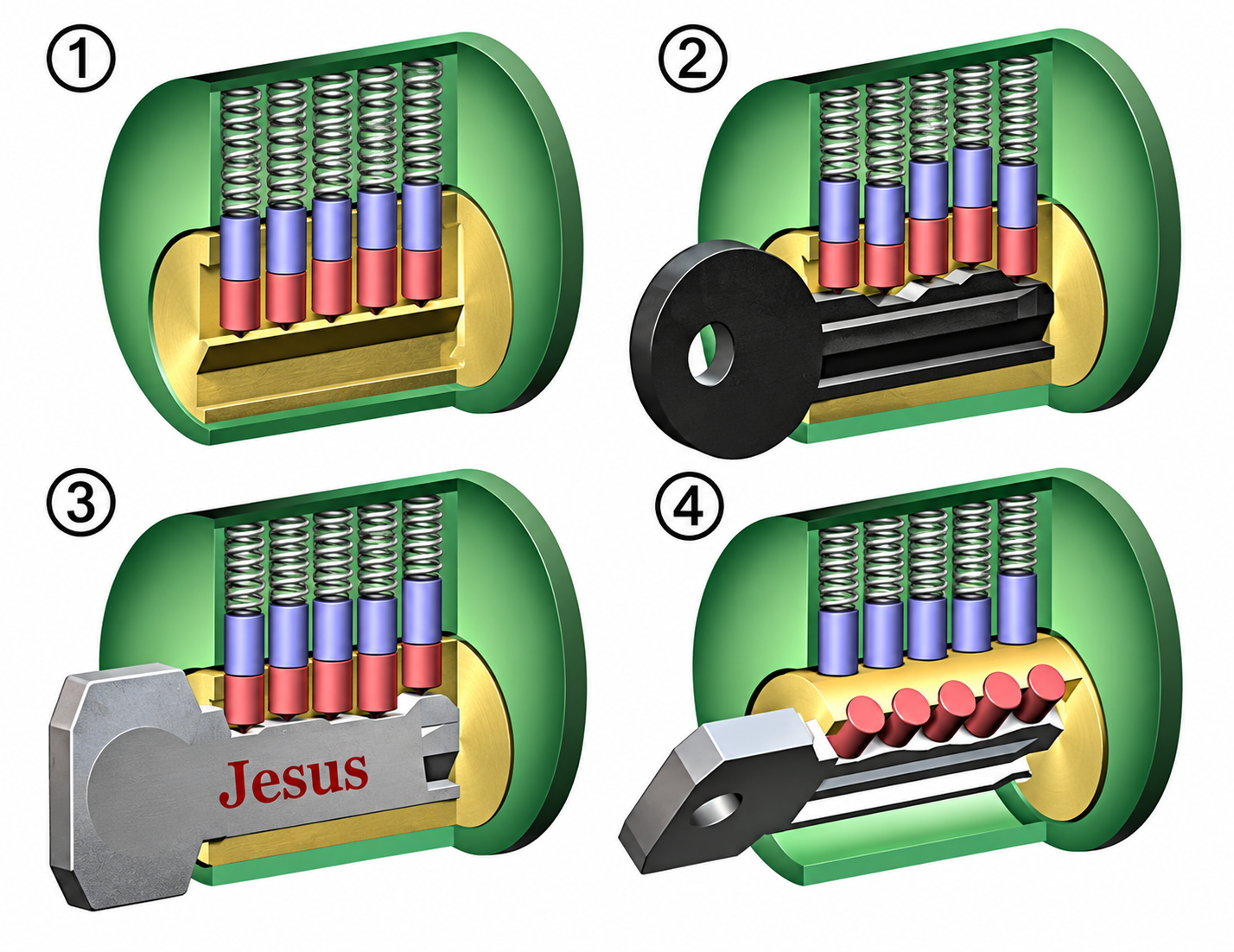
The last illustration I’d like to focus on is aimed at helping us relate to how some people experience fluidity in their same-sex attractions, with or without therapeutic interventions, and how some do not.
Have you ever seen the inside of a pin-and-tumbler lock, which is opened by a key? The mechanism works by having a column of spring-loaded pins of varying lengths within a cylinder. When the right key slides into the lock, the different notches and raised areas on the blade of the key cause the various length pins to align with the edge of the drum, allowing it to turn with the body of the key and thus open the lock.
If we were to apply this model to same-sex attractions, let’s say that each of the pins represents one of the factors listed under the soundboard illustration (gender nonconformity, genes, relationship with peers, etc.) Considering that we’ve understood the impact of these factors can change over time and also change as they interact with one another, we can imagine that this would cause the length of the pins in the lock to change at any given moment. We would also do well to remember that there are some factors impacting sexual temptations which we may not yet know about, and/or have little control over.
What would you imagine the chances are of finding a one-size-fits-all key that would line up with these pins that keep changing, and include some pins of unknown length? It is not very likely. Yet we need not conclude that finding a key that fits will be impossible. There may be times when the factors are not changing quite so dynamically, and the pins may fit just the right key that serves to line them up, or at least a number of them. I believe that is what we’re seeing when we encounter people who experience fluidity in their sexual temptations.
Following the recommendations in the next section, we can assist clients in discerning some of the root causes of this temptation from their past and help them work towards resolving barriers to reconciling with their masculinity or femininity, as appropriate.
Ultimately, Jesus is the key to unlocking all of the sin that binds us (Hebrews 12:1). He knows us intimately, and through the process of sanctification, He helps us mature into His likeness. Christians are promised a way out of every temptation (I Corinthians 10:13). When we say no to sin, we can say yes to the better things He has for us. The good news is that research has shown us that exclusive temptations for the same sex are rare,[6] giving hope to those who are searching for freedom to pursue healthy and holy relationships with the same and complementary sex. As counselors, we can walk alongside brothers and sisters in Christ and play a small part in the tremendous transforming work of the Lord.
[1] A major 2019 study, including data from 23andMe, found that genetics account for 8% to 25% of the variation in self-reported same-sex sexual behavior. The vast majority of the variation is attributed to non-genetic factors, highlighting that sexuality is a complex interplay of genes, environment, and personal experience.
Key Findings from the Study
· No Single Gene: The research, published in Science, concluded there’s no one “gay gene” but rather many genes, each with a tiny effect, scattered across the genome.
· Polygenic Influence: Thousands of genetic variants, including five significantly associated regions, collectively explain 8-25% of the differences in same-sex behavior within the population.
· Environmental Role: The remaining percentage is due to non-genetic factors, encompassing everything from prenatal influences to life experiences.
· Not Predictable: The genetic variants identified cannot predict an individual’s sexual orientation, underscoring the complexity and personal nature of sexuality.
[2] This list is not meant to be exclusive – there certainly may be other factors involved. For example, studies have been done on pheromones, left- vs. right-handedness, etc., as potential factors for some individuals. Studies have also shown that male homosexuality differs from female homosexuality in numerous ways.
[3] For some people, genetic or hormonal factors may have a greater influence than others, although scientists have determined that these are only factors that influence individuals to a degree. It is important to note that there may be a number of genetic factors involved, and studies have shown the genes involved seem to be different for men than for women. See: McHugh, P. R., & Mayer, L. S. (2016). Sexuality and gender: Findings from the biological, psychological, and social sciences (Special Report No. 50). The New Atlantis. https://www.thenewatlantis.com/wp-content/uploads/legacy-pdfs/20160819_TNA50SexualityandGender.pdf and Ganna, A., Verweij, K. J. H., Nivard, M. G., Maier, R., Wedow, R., Busch, A. S., ... & Zietsch, B. P. (2019). Large-scale GWAS reveals insights into the genetic architecture of same-sex sexual behavior. Science, 365(6456), eaat7693. https://doi.org/10.1126/science.aat7693
[4] Quote from Dr. Lisa Diamond: …from twin studies, the heritability of sexual orientation is around 31%, 32%. Meaning that if you have identical twins in the population about 32% of the population variability in sexual orientation is attributable to genetic factors. For personality it’s more around 40% or 45%. So you’re talking about a sort of, not a genetic determination but a genetic press on the probability of expressing certain sexual traits. And over the course of life that genetic press is interacting with life experiences, right?
So it’s absolutely possible that someone with a strong genetic press for same gender attraction will never be in an environment that really allows them to express that at all, right? In most cultures, you’re channeled pretty rigidly into heterosexual relationships, and that person may not ever consciously, you know, come to an awareness of that. Then they might have an opportunity to express it - it’s like, “Oh wow. Oh my God, I actually, like, would like to do this.”
…But there’s always this, you know, that that genetic press does not create something in your brain. It’s like – “Hey, I am gay, right?” These experiences…sexuality is a complicated thing and our society works so hard to influence kids’ developing sexuality and to give them certain messages, that you are never seeing a pure expression of everything, right. You are always seeing this very culturally shaped expression of a very complex human experience, and so it shouldn’t be such a surprise that the manifestation is so messy and so inconsistent. Because it’s…the genetic press is only partial and you’ve got strong cultural influences from day one that are working, working, working to channel and press and express.
Sprinkle, P. [Preston Sprinkle]. (2021, May 7). Sexual orientation, sexual fluidity, and the “born this way” myth: Dr. Lisa Diamond [Video]. YouTube.
[5] Image generated via Chatgpt: https://chatgpt.com/s/m_6871819a05c081919bf5ba315172557a
[6] Hence, directly contrary to the conventional wisdom that individuals with exclusive same-sex attractions represent the prototypical ‘type’ of sexual-minority individual, and that those with bisexual patterns of attraction are infrequent exceptions, the opposite is true. Individuals with nonexclusive patterns of attraction are indisputably the ‘norm,’ and those with exclusive same-sex attractions are the exception. Diamond, L. (2014). Gender and same-sex sexuality. In D. Tolman & L. Diamond (Eds.), APA handbook of sexuality and psychology (Vol. 1, pp. 633–681). American Psychological Association. https://doi.org/10.1037/14193-020

